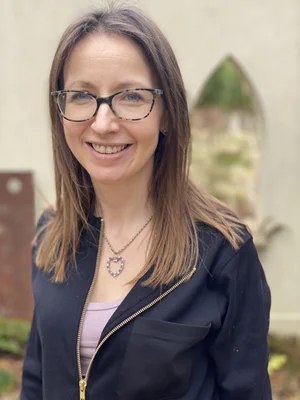
Friends, I am far away from Quinton, in Kerala for panchakarma, an Ayurvedic detox programme, for 15 days. In Quinton it’s cold, it’s raining and all is comfortingly familiar. In Kerala it's none of those things and having just arrived there is definitely a jerking sense that I’m in brand new territory emotionally as well as physically.
I’ve been wanting to experience panchakarma since I started to learn about Ayurveda, the ancient Vedic holistic health system, about 8 years ago, and more so since I embarked upon an Ayurvedic apprenticeship with Anne McIntyre, a UK authority on all things Ayurveda as well as being a western herbalist, back in 2021. I’ve since returned to Anne regularly for training and consultations and deepened my knowledge of Ayurveda with copious reading. And now, finally, here I am in Kerala, where the roots of Ayurveda run more than 3,000 years deep, about to experience panchakarma for myself at the Kairali Healing Village. This is a proper bucket list trip for me and I’ve chosen to keep this blog of my experiences partly for my own benefit (my memory not being what it once was…) and partly because I hope others might be curious about what’s involved.
Panchakarma means “five actions” - its a process used to clean the body of toxic materials left by disease and poor nutrition and its generally recommended in Ayurveda to carry our panchakarma at least once a year. The “actions” refer to the different processes used to cleanse the body. In modern Panchakarma generally only three of these are used. Given the other two are blood letting and vomitting, I’m grateful for that! - but that still leaves three not altogether enticing actions to enjoy: Virechana (purgation therapy), Vasti (medicated enema) and Nasaya (nasal administration of medicine). You can experience panchakarma without visiting India (there are centres which offer the programme in Germany, Austria and Spain, for example), but I felt very drawn to coming to Kerala for my own process. It’s my first time in India, and as a not altogether brave person, I feel quite adventurous and intrepid just being here, albeit with three close friends.
The Healing Village is about 2.5 hours from the nearest airport, so there was plenty of time on the journey to witness a little of Keralan life with its sights and sounds and smells, and to adjust to the hike in temperatures; it was 5 degrees when we left the UK and 25 degrees on landing 16 hours later. On arrival, feeling a bit crumpled and jet lagged, we’re draped in lovely white scarves and offered coconut water to drink whilst all the formalities are carried out.
The four of us each have separate bungalows dotted around the site and once unpacked, it’s already time for lunch - our first experience in the Ayurvedic canteen. Initially, everyone eats the “normal” menu; and it follows a daily formula. For lunch its a thin soup, a tiny portion of chopped cooked veg, curry, rice, a bread and then a very small desert - a couple of mouthfuls of rice pudding for example, which is what we had on that first day. I was genuinely excited to try authentic Aurvedic cuisine. I love my food, and mealtimes often feel like the highlight of my day. At our first lunch, I was struck by how bland the food was. I rarely leave anything on my plate but I struggled with my meal because it really wasn’t what I’d expected. Ayurvedic cuisine I’ve tired before has been flavourful, plentiful and vibrant. This all tasted, honestly, a bit (lot) meh.
That first afternoon I had my consultation with the Ayurvedic doctor I’d been assigned to, Dr A. She ran through a pre-arrival medical form I’d completed and confirmed I’d done my pre-retreat detox (no sugar/ alcohol/ caffeine/ processed food for 2 weeks prior to arrival), I was weighed, measured and had my blood pressure taken, then Dr A did her diagnosis of my requirements based on my pulse. She was curious about why I wanted to do Panchakarma as I wasn’t presenting with many health issues (aside from my foggy brain and feelings of overwhelm - I’d definitely like to see an improvement in these). I realised most people come to the process with the intention to fix a physical health issue - lower their heart rate or cholesterol for example - for me, as I told Dr A, it was curiosity, and wanting to immerse myself in the Ayurvedic experience, to try the specialist therapies Ayurveda advocates. A couple of days later that why didn’t feel quite strong enough, but I’m getting ahead of myself….
Dr A and I had a long chat about Ayurveda and about her proposed treatment plan for me. The process is broken down into three main stages; preparation, the detox and rejuvenation. Each day we’d receive a least two treatments and follow our prescribed diet. The onsite gym was off limits for me (I’ve never seen anyone in there so I guess this must be true for everyone, which begs the question why its here at all, tempting us in the middle of the site!) as was running. She talked through some of the detox treatments - more on those later too, but by day 5 we’ll be drinking medicated ghee (clarified butter) for breakfast and eating only porridge all day of we feel like eating at all. She explained that after the panchakarma, it’s recommended to go easy on life and food for at least three weeks. To treat the process as if you’re having an operation and need to nurture yourself back to strength thereafter.
I left the consultation feeling rather ambivalent about the panchakarma and already wondering if I could see if through. I collapsed into bed after that, the journey having caught up on me, with day 1 a broken night’s sleep away.